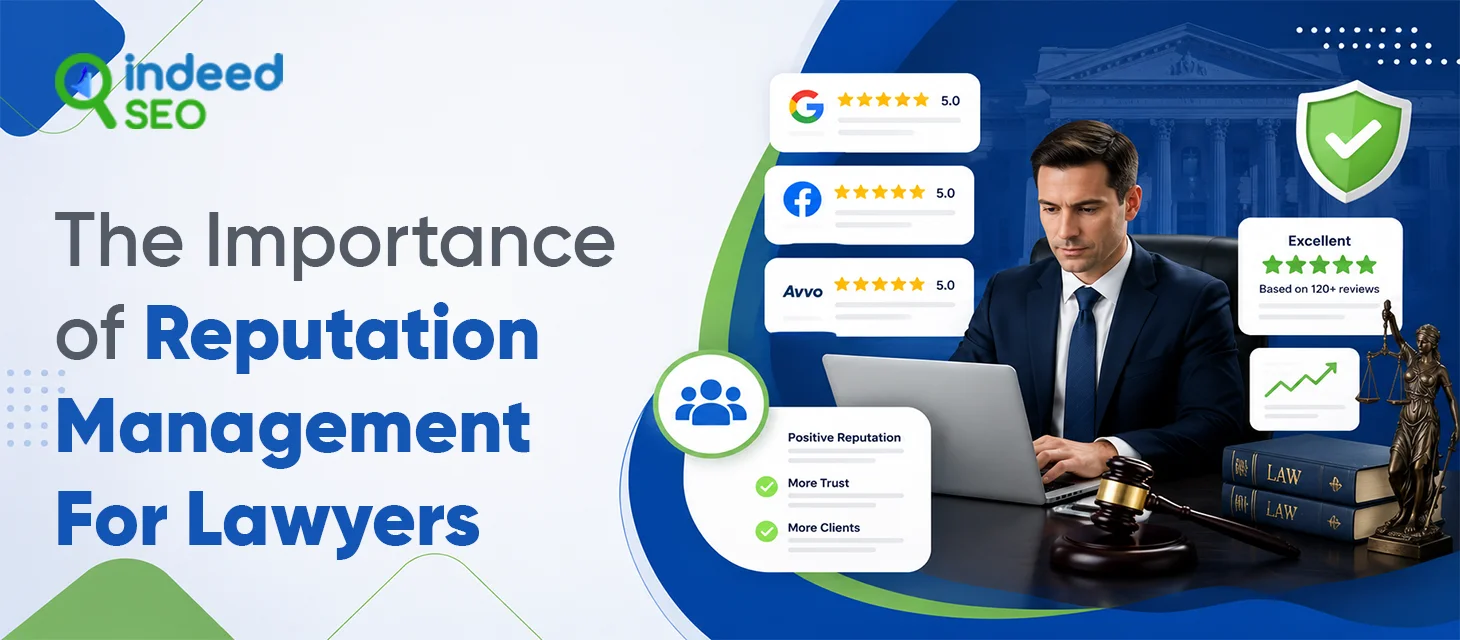
Online Reputation management matters for lawyers because most clients research an attorney online before ever making contact- 97% read reviews first, and 81% trust those reviews as much as a personal recommendation. For law firms, a strong online reputation determines who gets the call and who gets passed over. At IndeedSEO, we help law firms build a strong digital reputation through review management, brand monitoring, and reputation-building strategies that improve trust and credibility.
Want to know how? Keep reading! Below, we have shared a detailed guide on reputation management for lawyers.
Protect Your Law Firm’s Reputation with IndeedSEO’s ORM Services.
What Is Reputation Management?
Reputation management is the process of monitoring, changing, and safeguarding how others perceive you or your company online. For lawyers, this means keeping track of reviews, search results, and online mentions – and taking steps to ensure they accurately reflect your abilities and professionalism.
It’s not about hiding negative feedback. It’s about ensuring the full picture- reviews, search results, and online presence- accurately reflects the quality of your work.
Why Does Reputation Management For Lawyers Matter?
Here are some key reasons why reputation management matters for lawyers:Â
Clients Research First
Most potential clients search online before contacting a lawyer. They often read reviews, visit websites, and compare firms before deciding who to trust with their legal matter.
- Clients often research before making contact
- Reviews and search results influence decisions
- First impressions are usually formed online
Trust Matters
Legal issues can have serious financial, personal, or family consequences. Clients want to feel confident they’re hiring the right lawyer before taking the next step.
- Legal matters involve high-stakes decisions
- Clients look for signs of credibility
- A strong reputation helps build confidence
Reviews Influence Decisions
Reviews help potential clients understand what it’s like to work with a lawyer. Positive feedback from past clients can make a firm appear more trustworthy and reliable.
- Reviews act as social proof
- Positive experiences build trust
- Many clients compare reviews before choosing a lawyer
Personal Reputation Counts
Clients often search for a specific attorney’s name, especially after receiving a referral. This means both the lawyer’s and the firm’s reputation matter.
- Clients research individual attorneys
- Referrals often lead to online searches
- Personal branding supports firm credibility
Poor Reputation Costs Clients
A weak online presence can cause potential clients to choose another firm, even if your legal expertise is just as strong.
- Negative reviews can discourage inquiries
- Outdated profiles create doubt
- Competitors may win clients with stronger reputations
Visibility Depends on Reputation
Search engines and AI-powered search tools often rely on online reputation signals when displaying recommendations and search results.
- Reviews can impact online visibility
- Strong reputations improve discoverability
- AI search tools increasingly use reputation signals
First Impressions Happen Online
For many people, a Google search is their first interaction with a law firm. What they find can influence whether they contact you or keep looking.
- Search results shape first impressions
- Clients judge credibility quickly
- A positive online presence encourages inquiries
Benefits of Reputation Management for Lawyers
Here are the business benefits of reputation management for lawyers:Â
Builds Trust Before the First Consultation
Most clients study a lawyer’s online presence before contacting them. A good reputation with reviews, professional profiles, and reputable search results builds trust before the first interaction. Online reviews often impact hiring as much as personal recommendations.
Increases Client Inquiries and Conversions
When evaluating law firms, clients often choose based on online presence and reviews. By demonstrating credibility and customer pleasure, reputation management converts website views into qualified leads.
Strengthens Your Competitive Advantage
In competitive legal marketplaces, reputation matters. A well-managed web presence sets your organization apart and offers prospective customers trust in your offerings.
Improves Search Engine Visibility
Positive reviews, updated profiles, and online participation boost local search visibility. This helps internet legal service seekers locate your law firm.
Protects Your Firm from Negative Publicity
Potential customers may regard your company negatively after one unfavorable review or internet mention. Reputation management lets you track comments, resolve issues effectively, and prevent commercial harm.
Enhances Client Relationships
Responding to reviews and customer comments demonstrates your company prioritizes client experiences. This builds connections, generates recommendations, and shows client service.
Supports Long-Term Firm Growth
A good reputation brings in customers, recommendations, and brand awareness. Maintaining your reputation fosters long-term success.
Tips To Build Reputation Management For Lawyers

Building a strong reputation doesn’t happen by accident — it takes consistent, deliberate effort across a few key areas. Here’s what actually works for lawyers looking to build and protect their online reputation.
Ask Happy Clients for Reviews
Many happy clients are willing to leave a review- they just don’t think to do it unless you ask. Positive reviews help new clients feel more confident about choosing your firm.
- Ask for a review after a good experience
- Make it quick and easy for them to leave one
- Ask consistently, not just once in a while
- Focus on honest, real feedback
Respond to Reviews
People notice how a business responds to reviews. A simple thank-you for a good review, or a calm reply to criticism, leaves a good impression.
- Appreciate clients for positive reviews
- Reply politely to negative ones
- Stay professional in every response
- Never argue with reviewers online
Keep an Eye on What People Are Saying
It’s important to know what shows up when someone searches your firm’s name. Checking regularly helps you catch small problems before they grow.
- Check review sites often
- Keep an eye on Google reviews
- Search your firm’s name once in a while
- Deal with concerns quickly
Keep Your Online Profiles Updated
Wrong phone numbers, old addresses, or incomplete profiles make a bad impression and make it harder for clients to reach you.
- Update contact details regularly
- Keep office info accurate
- Add current attorney profiles
- Check your listings on legal directories
Share Helpful Information
Publishing useful content helps people learn about your services and shows you understand the legal problems they’re dealing with.
- Write blogs about common legal questions
- Share simple legal tips and updates
- Explain legal topics in plain language
- Help clients understand their options
Keep Your Google Business Profile Updated
Many people find lawyers through Google. A well-kept Google Business Profile makes your firm look more trustworthy and easier to find.
- Keep your business info accurate
- Add recent photos
- Collect client reviews
- Reply to questions and reviews
Stay Active Online
A visible, professional online presence shows people that your firm is active and established.
- Keep your website updated
- Stay active on LinkedIn
- Share useful content now and then
- Keep everything looking professional
Solve Problems Early
Clients are far less likely to leave a bad review when their concerns are handled quickly and professionally.
- Communicate clearly with clients
- Respond to concerns right away
- Set realistic expectations
- Keep client satisfaction a priority
Provide Great Client Service
At the end of the day, the best reputation strategy is simply doing great legal work. Happy clients leave better reviews and recommend your firm to others.
- Treat clients with respect
- Keep communication open throughout
- Deliver strong legal support
- Build long-term trust with every client
A strong reputation isn’t built overnight — it comes from consistent effort, not a one-time push. By giving clients great service and staying on top of your online presence, you’ll build trust, bring in more clients, and strengthen your firm’s reputation over time.
Cost of Reputation Management for Lawyers
Reputation management services for lawyers depend on several factors. Review monitoring and profile maintenance are enough for some companies, while others need content production, SEO, and reputation rehabilitation.
| Service Type | Estimated Cost | Best For |
|---|---|---|
| Basic Reputation Monitoring | $100 – $500/month | Solo lawyers and small firms |
| Review Management | $300 – $1,500/month | Firms looking to improve online reviews |
| Local SEO & Reputation Management | $500 – $3k /month | Firms wanting better local visibility |
| Content & Brand Management | $1k – $5k +/month | Firms building long-term authority |
| Reputation Repair Services | $2k – $10k + | Firms dealing with significant reputation issues |
| Full-Service Reputation Management | $2,500 – $15k +/month | Established firms requiring ongoing support |
Factors That Affect Reputation Management Costs
Law Firm Size
Larger firms usually require more extensive reputation management because they have multiple attorneys, locations, and online profiles to manage.
- Number of attorneys
- Multiple office locations
- Volume of online mentions and reviews
Current Reputation Status
The cost often depends on whether you’re maintaining a positive reputation or trying to recover from negative reviews and unfavorable search results.
- Existing review ratings
- Negative content that needs attention
- Overall online presence
Services Required
Different firms have different needs. Basic review monitoring costs less than a comprehensive reputation management strategy.
- Review management
- SEO services
- Content creation
- Social media management
Number of Platforms Managed
Managing multiple review sites, legal directories, and social media platforms typically increases the overall cost.
- Google Business Profile
- Avvo and legal directories
- Social media channels
- Third-party review platforms
Content Creation Needs
Many reputation management campaigns include blogs, attorney profiles, case results, and other content designed to strengthen online credibility.
- Blog writing
- Website content
- Attorney bios
- Thought leadership content
Agency Experience
Experienced reputation management agencies often charge higher fees due to their expertise, proven results, and specialized legal marketing knowledge.
- Industry experience
- Track record of results
- Legal marketing expertise
- Service quality and support
Protect Your Law Firm’s Reputation with IndeedSEO’s ORM Services.
ConclusionÂ
Looking to improve your law firm’s online reputation? Team up with IndeedSEO now! We help law firms build trust, manage reviews, and strengthen online presence with tailored reputation management solutions.Â
PakarPBN
A Private Blog Network (PBN) is a collection of websites that are controlled by a single individual or organization and used primarily to build backlinks to a “money site” in order to influence its ranking in search engines such as Google. The core idea behind a PBN is based on the importance of backlinks in Google’s ranking algorithm. Since Google views backlinks as signals of authority and trust, some website owners attempt to artificially create these signals through a controlled network of sites.
In a typical PBN setup, the owner acquires expired or aged domains that already have existing authority, backlinks, and history. These domains are rebuilt with new content and hosted separately, often using different IP addresses, hosting providers, themes, and ownership details to make them appear unrelated. Within the content published on these sites, links are strategically placed that point to the main website the owner wants to rank higher. By doing this, the owner attempts to pass link equity (also known as “link juice”) from the PBN sites to the target website.
The purpose of a PBN is to give the impression that the target website is naturally earning links from multiple independent sources. If done effectively, this can temporarily improve keyword rankings, increase organic visibility, and drive more traffic from search results.